


 ×
×

Can Black People Have Naturally Straight Hair?
Last updated Feb.13,2026
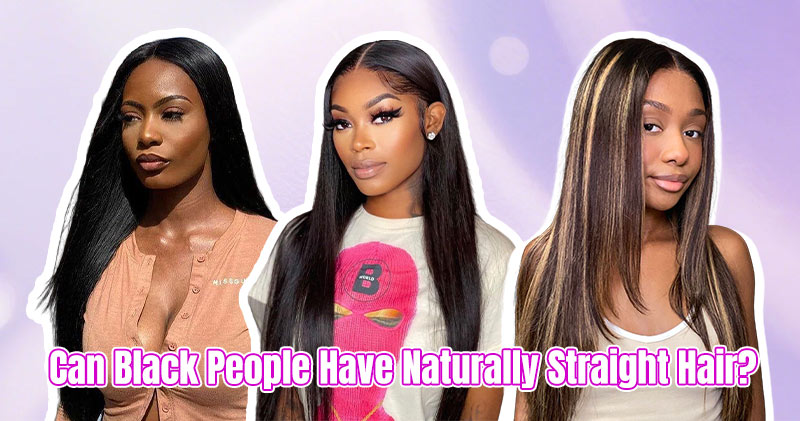
When we think of Black people's hair, the first images that come to mind are tight coils, bouncy curls, or kinky textures. Because type 4 hair is the most common hair texture among people of African descent. Some people might have such a question: Can Black people have naturally straight hair? The simple, scientific answer is yes. But it's more nuanced than a simple yes. In this article, we'll explore the facts behind this common question.
Understanding Hair Texture and Classification
Hair texture is typically divided into four main types, using the widely recognized Andre Walker Hair Typing System:
▪️Type 1: Straight hair
▪️Type 2: Wavy hair
▪️Type 3: Curly hair
▪️Type 4: Coily or kinky hair
Most people of African descent naturally have type 4 hair. Their hair is usually coily, kinky, or Afro-textured. Black people have many hair types, like type 3, but type 4 is the most common.
Can Black People Have Naturally Straight Hair?
Genetic Variation & Genetic Diversity
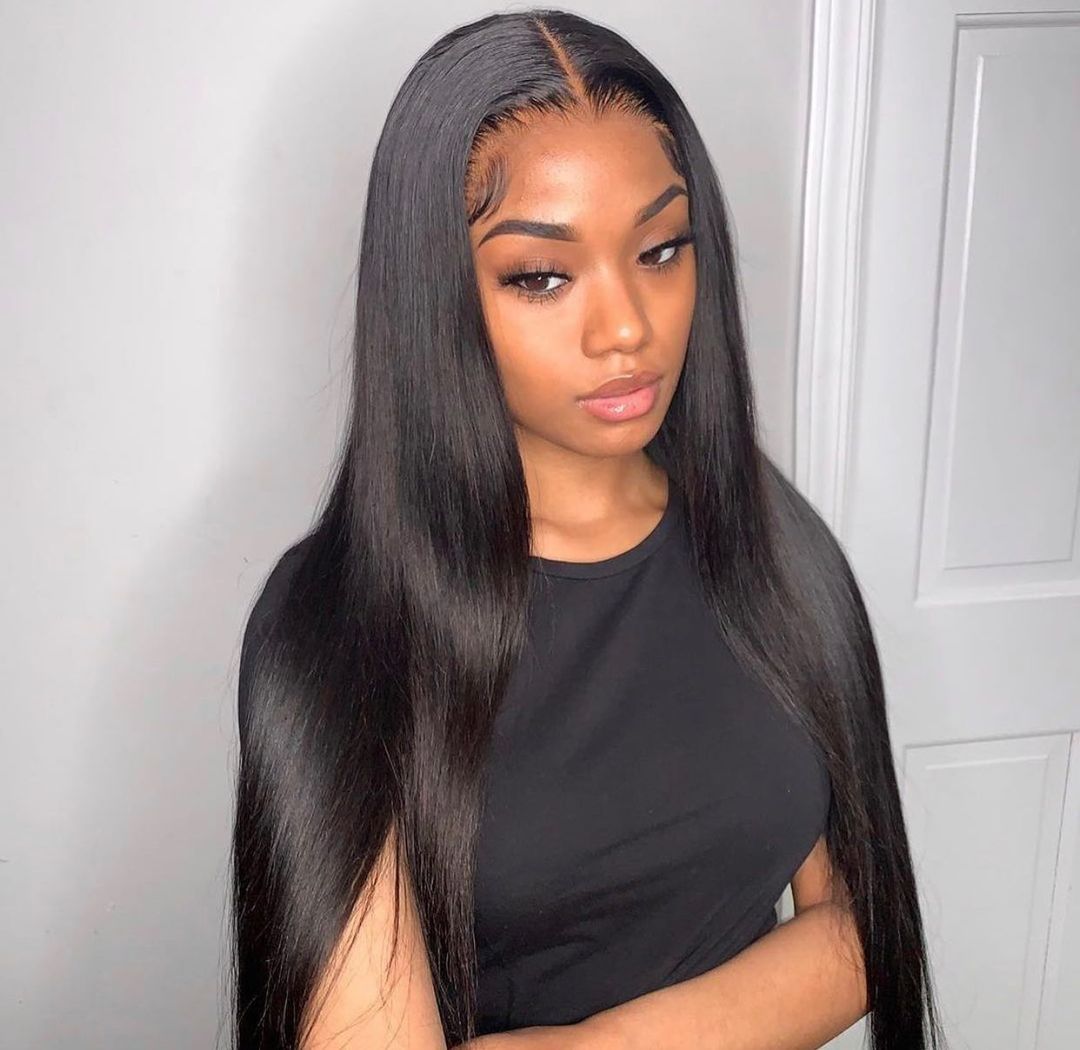
Due to genetic variation, Black people have developed and built up a great amount of human genetic diversity. The immense genetic diversity means that all hair types exist in Black people—from type 1 (straight hair) to type 4 (coily or kinky hair).
Mixed Ancestry and Genetic Mutations
Black people with mixed heritage or genetic mutation can naturally have straighter hair. Genetics can influence follicle shape, curl pattern, and hair density. This leads to many different hair textures. So, the hair types and hair textures don't define your identity. These only show the genetic diversity.
The Primary Determinant: Hair Follicle Morphology
Your hair's texture—straight, wavy, curly, or coily—isn't determined by race. It is determined by the physical architecture of the hair follicle. The shape of the hair follicle and how hair cells grow determine whether your hair is straight, wavy, or curly.
▪️Straight Hair
Round hair follicles. When hair grows from a perfectly round follicle, it grows straight, smooth, and even.
▪️Wavy, Curly, Coily, or Kinky Hair
Oval-shaped or flat follicles. When hair grows from an asymmetrical oval-shaped or flat follicle, it grows wavy, curly, or coily.
Common Myths About Black People's Hair Texture
Myth 1: All Black people have the same hair type.
This is one of the most common misunderstandings. Black people have many hair textures, from loose waves to tight coils. Some even have naturally straight hair.
Myth 2: Black women don't have natural straight hair?
While natural straight hair is rare among Black people, a very small number are born with it.
Myth 3: Black people with straight hair means they're “not fully Black.”
Some Black person with straight hair are just born that way. Hair texture is not a measure of ethnicity. The hair texture (whether straight, curly, or coily) does not define one's Blackness.
How Can Black People Get Natural Straight Hair?
Silk Press
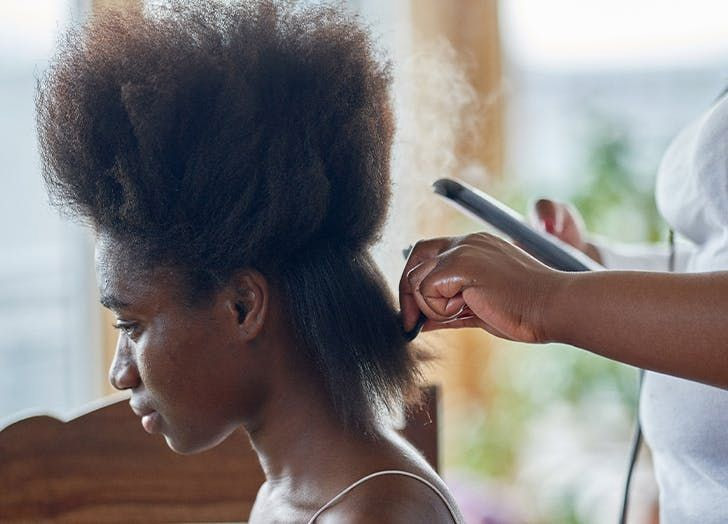
Many Black women choose the professional silk press to straighten their hair. Uses a blow dryer, a high-quality flat iron, and specialized serums to make Type 4 hair silky, smooth, and shiny.
Flat Iron
Apply some heat protectant spray and use the heated plates of the flat iron to straighten the hair.
Chemical Relaxers
Some Black people choose chemical relaxers to get permanent straight hair. Relaxers can break down their hair's natural curl pattern, making it straight and smooth.
Quick Weave or Sew-In
Some Black people purchase some straight hair bundles. They braid their natural hair flat, wear a wig cap to glue the hair wefts on it, or directly sew the hair wefts on the braids.
Straight Wigs
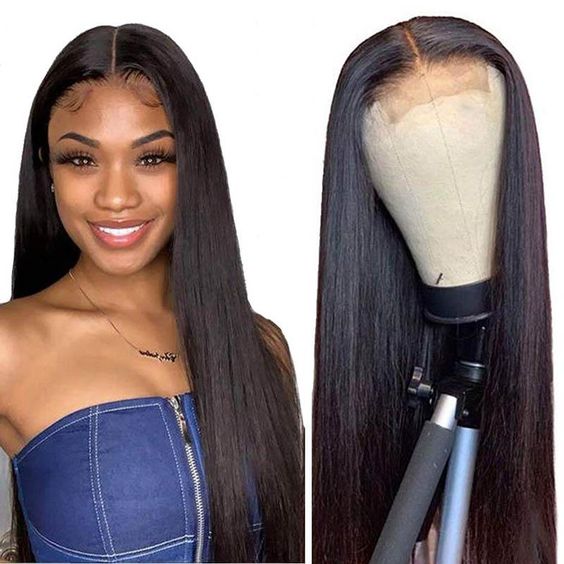
For Black people, straight wigs are an efficient tool to get naturally straight hair. Wearing wear and go wigs, beginners easily get naturally straight hair, no complex skills are needed. The machine-made v part wig, u part wig, and half wig can achieve a super natural and realistic straight hairstyle. Just use a flat iron to straighten the leave-out and create a seamless blend.
How to Care for Naturally Straight Hair or Wig?
✔️Use sulfate-free shampoo to clean your naturally straight hair or wig. But don't wash too frequently.
✔️Detangle the hair starting from the ends and working up to prevent snapping.
✔️Apply hair conditioner to the hair; avoid applying it to the scalp and wig cap.
✔️Sleep on a silk or satin pillowcase or use a silk scarf. Better remove your straight wig when you sleep in bed.
✔️Apply a heat protectant spray before you use heat styling tools on your naturally straight hair or wig.
Final Thought
So, can Black people have naturally straight hair? The answer is yes. Because of genetics, rare Black people can naturally have straight hair. The straight hair is a simple part of the beautiful, wide-range hair diversity of Black people. The hair type and texture can't define their Black identity. Every texture deserves to be seen, respected, and loved.
Related Posts:


